Why SPF Is Non‑Negotiable (Daily + On Holiday)
SPF is the most valuable step in any skincare ritual. Worn daily, it helps protect skin from UVA and UVB exposure, supporting a brighter, more even-looking complexion while helping to minimise the appearance of dark spots and premature signs of ageing. Whether you’re heading to work, enjoying lunch outdoors, or spending long days poolside, consistent application is the foundation of beautifully protected skin.
The Shift to Lightweight, Skincare‑Led Formulas
Today’s sun protection is worlds away from the heavy, chalky textures of the past. Modern SPFs are designed to layer seamlessly with skincare and makeup, with featherlight finishes and added benefits, hydration, soothing comfort, and antioxidant support, so protection feels like a pleasure, not a compromise.
Brands Our Beauty Buyers Love
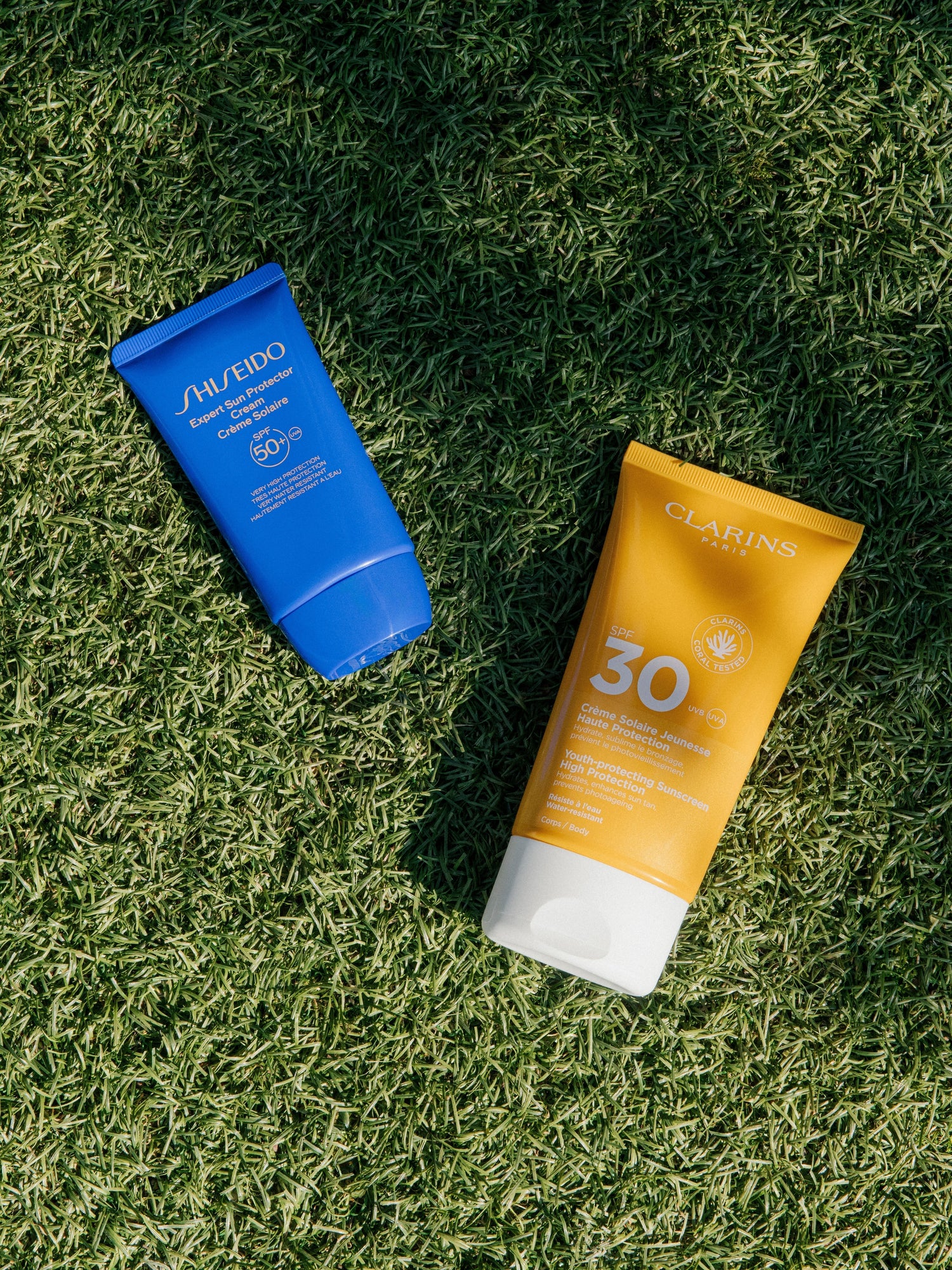
Technology-led, water-resistant formulas with refined, weightless textures that sit beautifully on skin.
Plant-powered expertise, paired with reliable broad-spectrum protection and comfortable, nourishing finishes.
High-performance, long-lasting protection designed for extended sun exposure, ideal for sensitive skin and busy days.
Dermatologist-developed, allergy-tested, and often fragrance-free, excellent for those who prefer gentle, minimal formulas.
Skincare-first SPFs that combine protection with hydration and calming benefits for modern, multi-tasking routines.
How to Choose the Right Sunscreen
What Sunscreen Is (and How It Works)
Sunscreen helps protect skin by filtering UV rays before they cause visible damage.
Chemical Filters
Absorb UV energy and convert it into heat, often offering ultra-light, invisible finishes that wear well under makeup.
Mineral Filters
Physical filters such as zinc oxide and titanium dioxide help reflect and scatter rays, often a great match for sensitive or reactive skin.
SPF 30 vs SPF 50
-
SPF 30 blocks around 97% of UVB rays.
-
SPF 50 blocks around 98%, a small difference on paper, but useful in real life, especially because most people under-apply.
For everyday city wear, SPF 30 is a strong baseline. For brighter days, prolonged outdoor time, pigmentation concerns, or when using active skincare, SPF 50 is often the most reassuring choice.
Broad‑Spectrum Protection
UVA is associated with visible ageing; UVB is the main cause of sunburn. Broad-spectrum formulas help protect against both, making them the gold standard for daily wear.
Chemical vs Mineral: Which Should You Choose?
-
Chemical sunscreens: invisible, lightweight, and typically ideal under makeup.
-
Mineral sunscreens: often preferred for sensitive skin and those prone to stinging around the eyes.
Choosing by Skin Type
-
Oily /Combination: lightweight fluids or gels; look for non-comedogenic, shine-control finishes.
-
Dry: richer creams with humectants and emollients for lasting comfort.
-
Sensitive: mineral, fragrance-free options can feel calmer, especially around the eyes.
-
Mature: formulas with antioxidants and hydrating actives to support softness and glow.
Ingredients to Look For (and Why They Matter)
A great SPF can do more than protect. Look for:
-
Humectants (e.g., glycerin, hyaluronic acid) for hydration
-
Antioxidants to help defend against environmental stress
-
Comforting agents for a smoother, more wearable finish, especially if you reapply
The Best SPF Formats to Suit Your Routine
Best Sunscreens for Face : Lightweight Everyday SPF
Choose sheer, fluid textures that disappear on application and sit well under makeup, no white cast, no heaviness.
Best Sunscreens for Face: Premium SPF with Skincare Benefits
Luxury formulas often combine sun protection with skincare favourites (hydrating and smoothing ingredients, brightening antioxidants), creating a polished base for the rest of your routine.
Best Sunscreens for Body: High‑Protection Formulas
For long days outdoors, opt for high-SPF, broad-spectrum protection in an easy-to-apply lotion that encourages generous coverage.
Best Sunscreens for Body: Water‑Resistant and Sport Options
For long days outdoors, opt for high-SPF, broad-spectrum protection in an easy-to-apply lotion that encourages generous coverage.
Best Sunscreens for Body: Water‑Resistant and Sport Options
If you’re swimming, sweating, or on the move, choose water-resistant formulas and reapply as directed, especially after towelling.
Best Sunscreens for Travel
Compact Formats (Sticks, Mists, Minis)
Sticks and minis are ideal for handbags and carry-on. Mists can be convenient for top-ups, though even coverage is always easier with lotions and fluids.
Multi‑Functional SPF Products
Tinted SPFs, moisturiser-SPF hybrids, and primer-style formulas streamline your routine, perfect for holidays when you want fewer steps and a flawless finish.
SPF Trends
Skincare + SPF Hybrid Products
The most modern SPFs blur the line between sun care and skincare, protecting while supporting glow, comfort, and visible smoothness.
Invisible, Makeup‑Friendly Formulas
Expect lightweight textures designed to work with makeup: less slip, fewer, white-cast issues, and a more refined final look.
Wearing SPF Under Makeup (and How to Layer It)
Treat SPF as the final step of skincare: apply after moisturiser, let it set, then follow with primer and foundation. For touch-ups, sprays can be convenient, but when possible, reapplying a thin, even layer of fluid or lotion offers more dependable coverage.
How to Apply SPF Properly
Application Amounts
Apply generously, around a teaspoon for face and neck, and roughly a shot-glass amount for the body.
Reapplication Guidance
-
Reapply every 2 hours when exposed to sun
-
Reapply after swimming, sweating, or towelling
-
Use water-resistant formulas for active days
-
Keep a travel format on hand for midday top-ups
Common Mistakes
-
Forgetting ears, hairline, neck, and hands
-
Under-applying (the most common issue)
-
Skipping reapplication
-
Using expired sunscreen
-
Assuming clouds mean no UV exposure